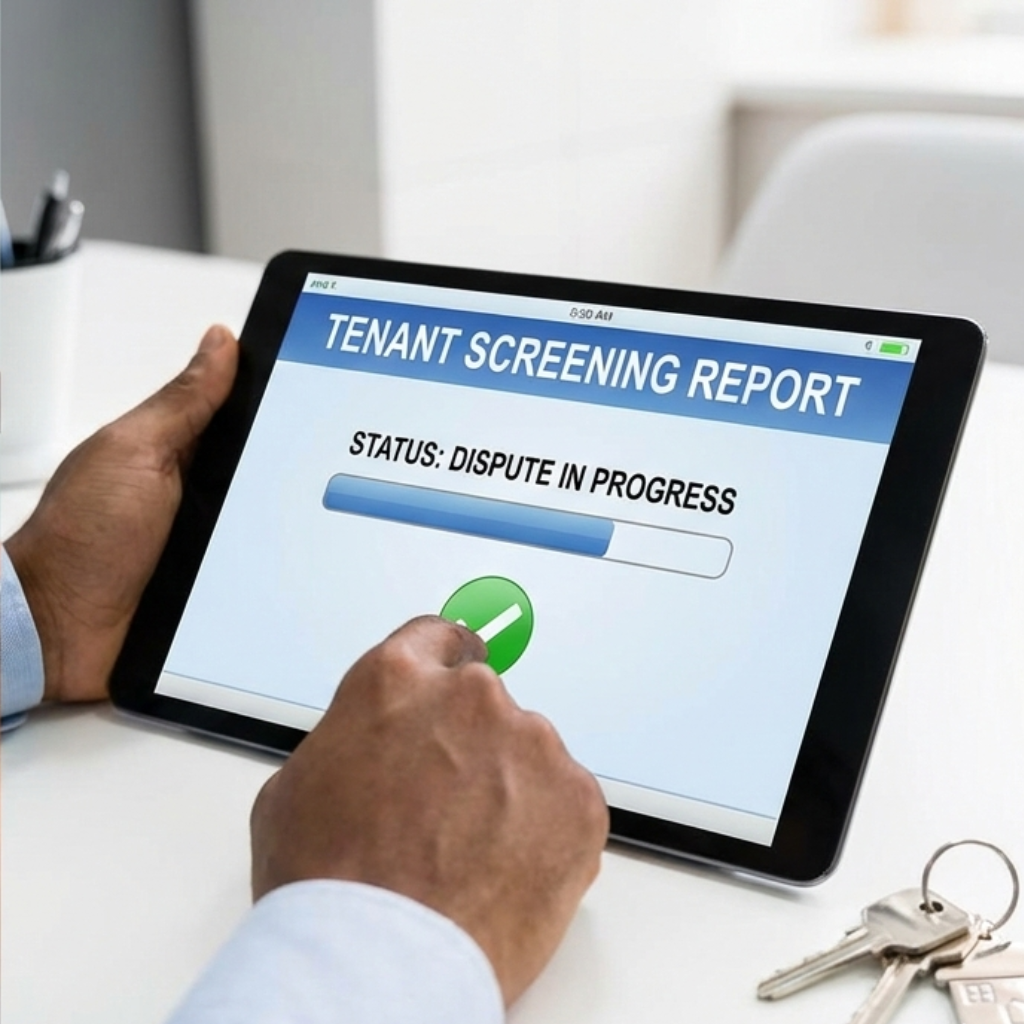
A wrongful eviction on your rental history isn't just an annoyance—it's a barrier that can lock you out of decent housing for years, even when the eviction was dismissed, vacated, or based on mistaken identity. And here's what most tenants don't realize: clearing it requires fighting on two separate fronts simultaneously.
Understanding how to fix both the court record and force screening companies to stop reporting false information is what separates tenants stuck with permanent housing barriers from those who clear their records and move forward.
Why One Eviction Record Creates Two Separate Problems
When a wrongful eviction appears on your record, you're actually dealing with two distinct systems that don't automatically sync with each other.
Problem 1: The Housing Court record
- Court case filed against you remains in public records
- Shows up in court database searches
- Visible to landlords who check eCourts directly
- Doesn't disappear even if you won the case
Problem 2: Tenant screening reports
- Private companies collect and sell your rental history
- May report inaccurate or outdated information
- Don't automatically update when court records change
- Multiple companies may have different versions of your record
Why both matter: Some landlords check court records directly. Others use screening companies. Many do both. Fixing only one source leaves you vulnerable to denials from landlords using the other source.
The two-track solution:
- Track 1: Fix or clarify the court record itself
- Track 2: Force screening companies to correct or remove false information
Both tracks must be pursued, often simultaneously, to fully clear wrongful eviction from blocking your housing opportunities.
Step 1: Identify Exactly What's on Your Record
Before you can fix anything, you need to know precisely what information exists and where it's appearing.
Get Your Complete Housing Court Record
How to obtain court records:
Online through eCourts:
- Visit NYS Unified Court System website
- Search by your name and borough/county
- View case summaries and docket entries
- Download available documents
In person at Housing Court clerk:
- Go to Housing Court where case was filed
- Request complete case file using case number
- Get certified copies of key documents
- Clerk can explain what documents mean
What to look for in court records:
- Case outcome: dismissed, judgment for landlord, judgment for tenant, settled
- Warrant status: issued, executed, stayed, vacated
- Payment history if nonpayment case
- Stipulations or settlement agreements
- Dismissal orders or judgments
- Any post-judgment motions or orders
Document everything:
- Case number and index number
- Date filed and disposition date
- Exact outcome and any orders
- Names of all parties
- Type of case (nonpayment, holdover, illegal lockout)
This complete picture shows what actually happened versus what might be incorrectly reported.
Obtain Your Tenant Screening Reports
Your legal right to reports: Under the Fair Credit Reporting Act (FCRA), you're entitled to a free copy of any consumer report used to deny you housing.
How to get reports after denial:
- Landlord must send "adverse action notice" explaining denial
- Notice must identify which screening company provided report
- You have 60 days to request free copy from that company
- Screening company must provide report within reasonable time
Proactively getting reports: Even without denial, you can request reports from major tenant screening companies:
Major tenant screening companies:
- CoreLogic/SafeRent: rentgrowscreening.com
- RentBureau/TransUnion: mysmartmove.com
- Experian RentBureau: experian.com/rentbureau
- LexisNexis Resident History: lexisnexis.com/consumer
- Checkr: checkr.com
What these reports show:
- Eviction cases filed against you
- Judgments and their amounts
- Case outcomes and dates
- Sometimes inaccurate or incomplete information
- Data from multiple court systems
Cost considerations:
- Free after adverse action (denial)
- Some companies charge for proactive requests
- You may be entitled to one free report annually
- Fees typically $10-$20 if charged
Compare Court Records to Screening Reports
Look for discrepancies:
Common errors to identify:
- Case dismissed but report shows judgment
- Judgment vacated but report still lists it
- Wrong person (similar name, different individual)
- Outdated information (old cases still showing)
- Duplicate entries (same case reported multiple times)
- Incorrect amounts or dates
- Cases you were never involved in
Different versions across companies:
- One screening company may have correct information
- Another may have errors
- Court record may be accurate but reports aren't
- Each company sources data differently
Why comparison matters: Identifying exactly what's wrong and where provides ammunition for disputes. Generic "this is wrong" complaints are weak. Specific "your report shows judgment but court record shows dismissal on [date]" complaints get results.
Step 2: Fix the Housing Court Record
New York doesn't have general expungement for Housing Court cases, but specific legal mechanisms can correct or vacate wrongful judgments.
Vacating Default Judgments
What is a default judgment:
- You didn't appear in court
- Landlord got automatic judgment against you
- Judgment may have been entered without your knowledge
- Warrant of eviction may have been issued
Grounds to vacate default: You must prove two things:
1. Reasonable excuse for default:
- Never received court papers (improper service)
- Papers served on wrong person
- Medical emergency prevented appearance
- Court date notice arrived after court date
- Calendar or scheduling confusion
- Other legitimate reason you missed court
2. Meritorious defense:
- You had valid defense to eviction
- You paid the rent landlord claimed you owed
- Landlord was wrong party (not your actual landlord)
- You never lived at the address
- Landlord failed to maintain habitability
- Retaliation or discrimination
- Any defense that would have resulted in case dismissal
How to file motion to vacate default:
Step 1: Prepare Order to Show Cause
- Legal document asking court to vacate judgment
- Includes proposed order for judge to sign
- Sets hearing date for landlord to oppose
- Available as form from court clerk
Step 2: Write supporting affidavit
- Your sworn statement explaining:
- Why you missed court (reasonable excuse)
- What your defense is (meritorious defense)
- Supporting facts and timeline
- Request to vacate judgment
Step 3: Gather supporting documents
- Proof of improper service
- Rent receipts if claiming payment
- Medical records if health emergency
- Evidence supporting your defense
- Lease showing you weren't tenant
- Any documents proving landlord was wrong
Step 4: File with court
- Submit Order to Show Cause to clerk
- Pay filing fee (may be waived if indigent)
- Judge reviews and signs if sufficient grounds shown
- Return date set for hearing
Step 5: Serve landlord
- Must serve landlord/attorney with copies
- Follow court rules for service
- Proof of service filed with court
Step 6: Attend hearing
- Present your case to judge
- Landlord can oppose
- Bring all supporting evidence
- Judge decides whether to vacate
If granted:
- Default judgment vacated
- Case reopened
- New court date set
- You can now present your defense
- May result in dismissal or settlement
Timeline:
- Can file motion years after default
- Sooner is better (stronger excuse)
- Some judges hesitant on very old cases
- Act as soon as you discover default
Ensuring Dismissals Are Properly Recorded
When your case was dismissed: Dismissal should be clearly reflected in court record, but sometimes isn't documented properly.
Types of dismissals:
Dismissal for landlord's failure:
- Landlord didn't appear
- Landlord withdrew case
- Landlord failed to prosecute
- Should show "dismissed" in court records
Dismissal on the merits:
- Judge found in your favor
- You prevailed on legal defense
- Landlord's case lacked merit
- Should show "judgment for tenant"
Stipulation of discontinuance:
- Parties agreed to end case
- Landlord withdrew in exchange for something
- Should be documented in signed stipulation
Problems that occur:
- Dismissal order not entered in system
- Case shows "disposed" without clear outcome
- Stipulation not properly filed
- Electronic record incomplete
How to ensure clear dismissal record:
If you have dismissal order:
- Ensure it's filed in court file
- Get certified copy from clerk
- Check eCourts shows dismissal
- If not showing online, ask clerk to update
If dismissal wasn't reduced to order:
- File motion requesting order documenting dismissal
- May require stipulation with landlord's attorney
- Judge must "so order" the stipulation
- Creates clear record of case outcome
If landlord won't cooperate:
- File motion for order clarifying disposition
- Provide evidence case was dismissed (court minutes, judge's oral decision)
- Court can enter order without landlord's consent
Why this matters: "Disposed" or "settled" doesn't tell future landlords you won. Clear "dismissed" or "judgment for tenant" does. The clearer the victory, the less screening companies can misrepresent it.
Getting Judgments and Warrants Vacated
When judgment exists but was wrongful:
Grounds to vacate judgment:
- Fraud by landlord
- Newly discovered evidence
- Procedural errors in case
- Judgment based on false information
- Landlord breached settlement terms
Process: Similar to vacating default but with different legal grounds. File motion showing why judgment should be set aside.
Vacating warrants:
- Warrant of eviction issued based on judgment
- If judgment vacated, warrant must also be vacated
- Request both in same motion
- Prevents future execution of warrant
Settlement violations:
- If you performed your settlement obligations but judgment not satisfied
- File motion to vacate based on compliance
- Show proof of payment or performance
- Court orders judgment satisfied
Special Cases: Post-Foreclosure Protections
Sealed records for certain foreclosure evictions: New York law requires sealing of certain post-foreclosure eviction records to protect tenants who weren't responsible for foreclosure.
When records must be sealed:
- Building foreclosed by bank or new owner
- You were tenant, not owner
- New owner evicted you after foreclosure
- You weren't party to foreclosure proceeding
Effect of sealing:
- Record not visible in public court searches
- Screening companies can't legally report it
- Landlords can't access sealed records
- Violation to use sealed record in housing decisions
How to ensure sealing:
- Check if your post-foreclosure eviction qualifies
- File motion requesting sealing if not automatic
- Cite statutory requirement for sealing
- Once sealed, notify screening companies
If screening company reports sealed record:
- That's an FCRA violation
- Dispute immediately
- Company must remove sealed information
- May have legal claim for damages
Step 3: Force Screening Companies to Correct Reports
Fixing the court record is only half the battle. You must also ensure screening companies update their databases to reflect corrections.
Understanding Your FCRA Rights
Fair Credit Reporting Act protections:
- Screening companies must maintain accurate information
- You have right to dispute inaccurate information
- Companies must investigate disputes
- Must correct or delete unverifiable information
- Can't report information they can't verify
What this means practically: Even if court record isn't perfect, if screening company can't verify what they're reporting or you provide evidence it's wrong, they must correct it.
How to Dispute Screening Report Errors
Step 1: Identify all companies with errors
- Get reports from multiple screening companies
- Each may have different (wrong) information
- Must dispute with each company separately
- Some landlords use multiple services
Step 2: Draft detailed dispute letter
Your dispute letter must include:
- Your full name and current address
- Case number of wrongful eviction
- Specific error you're disputing
- Correct information
- Supporting documentation (attached)
- Request to investigate and correct
- Deadline for response (30 days)
Example language: "I am disputing the eviction record listed on my tenant screening report for case number [X]. Your report shows a judgment was entered against me. However, the attached court order dated [date] shows this case was dismissed. Under the FCRA, I am requesting you investigate this error and correct your records to show this case was dismissed, not judged against me."
Step 3: Attach supporting documentation
Critical documents to include:
- Court order showing dismissal or vacated judgment
- Certified copy of court docket showing outcome
- Stipulation showing settlement and case withdrawal
- Proof of payment if nonpayment case
- Order to Show Cause vacating default
- Any order clarifying case disposition
Why documentation matters: Screening companies can't just take your word. Official court documents force them to correct their records or admit they can't verify what they're reporting.
Step 4: Send via certified mail
- Proof of delivery when they sign
- Creates legal record you disputed
- Starts clock for their investigation timeline
- Keep all tracking and delivery confirmation
Step 5: Follow up if no response
Company obligations:
- Must acknowledge dispute
- Investigate within 30-45 days (usually 30)
- Notify you of results
- Correct or delete unverifiable information
- Provide updated report
If they don't respond:
- Send follow-up demand
- File complaint with Consumer Financial Protection Bureau (CFPB)
- File complaint with NY Attorney General
- Consider legal action for FCRA violations
What Happens During Investigation
Screening company must:
- Review your dispute and evidence
- Contact court or data source to verify
- Compare their information to your documentation
- Make reasonable investigation
- Cannot simply re-verify without checking your evidence
Possible outcomes:
1. Error corrected:
- Record updated to show dismissal, vacation, or correct outcome
- You receive notification of correction
- Updated report provided
2. Entry deleted:
- If they can't verify information, must delete it
- Record removed from your report
- Provides clean slate
3. Record remains but modified:
- May add explanation or notation
- Updates dates or outcomes
- Better than original error but not perfect
4. Dispute rejected:
- Company claims information verified
- Maintains their original report
- Must explain why they believe it's accurate
Your rights if dispute rejected:
- Request "statement of dispute" added to file
- File complaints with regulators
- Pursue legal action if clearly wrong
- May need attorney for FCRA lawsuit
Dealing with Multiple Screening Companies
Why multiple disputes needed:
- Different companies compile different data
- No central database they all use
- Correction at one doesn't automatically fix others
- Each company responsible for their own accuracy
Strategy:
- Dispute with all companies showing errors
- Use same dispute letter and documentation package
- Track which companies responded and how
- Follow up with each separately
Common players to check:
- CoreLogic/SafeRent (largest)
- TransUnion RentBureau
- Experian RentBureau
- LexisNexis
- Checkr
- Any company named in adverse action notice
Adding Statement to Your File
If screening company won't remove error: FCRA gives you right to add 100-word statement to your file explaining the dispute.
What your statement should say:
- Brief explanation of what's wrong
- That case was dismissed/vacated
- That you disputed but company refuses to correct
- Available court documents prove your version
Limitations:
- Only 100 words
- Included when landlords pull your report
- Doesn't remove the error, just provides your side
- Better than nothing if company won't delete
Example statement: "The eviction case shown was dismissed by the court on [date] due to landlord's error. I have provided certified court records showing dismissal, but the screening company refuses to correct this. The case should not appear as judgment against me. Court documents available upon request."
Step 4: Combat Ongoing Blacklisting
Even after fixing court records and screening reports, you may still face barriers from landlords who see that a case once existed.
Understanding What Landlords Can See
Court records aren't sealed:
- Most Housing Court cases remain publicly accessible
- Landlords searching eCourts can see a case was filed
- They can see it was dismissed, but case existence is visible
- No automatic expungement in New York
What this means:
- Landlord may know case existed even if you won
- May hold it against you despite dismissal
- Discriminatory but hard to prove
- Requires proactive explanation
New York's Sealed Record Protections
Recent protections: New York law increasingly protects tenants from discrimination based on sealed records.
What's protected:
- Sealed eviction records cannot legally be used in housing decisions
- Landlords who use sealed records face penalties
- Includes certain post-foreclosure cases
- Expanding protections for other sealed cases
What landlords risk:
- Violations of fair housing laws
- Civil penalties
- Liability for damages to tenant
- Regulatory enforcement
If landlord uses sealed record:
- Document that they accessed sealed information
- File complaint with appropriate agency
- Consult attorney about lawsuit
- May recover damages for violation
Addressing Visible-But-Dismissed Cases
When case shows as dismissed but landlord still denies:
Proactive explanation strategy:
- Include cover letter with application
- Explain case was wrongfully filed and dismissed
- Provide court order showing dismissal
- Emphasize you prevailed
Example language: "You may see a dismissed Housing Court case from [date]. This case was filed in error by a prior landlord and was dismissed by the court. I have attached the court order showing the case was dismissed in my favor. I have never been evicted and have excellent rental history, as my references will confirm."
Why this helps:
- Gets ahead of discovery
- Shows transparency
- Provides context landlord might not otherwise have
- Demonstrates you weren't evicted
Dealing with Denials Based on False Information
If landlord denies based on wrong information:
Step 1: Request specific reason
- Ask landlord which screening company they used
- Request copy of report landlord saw
- Identify specific information causing denial
Step 2: Provide corrected documentation
- Court orders showing dismissal or vacation
- Updated screening reports showing correction
- Certified court records
- Proof of dispute letters and corrections
Step 3: Ask for reconsideration
- Formal letter requesting review
- Attached corrected documentation
- Explain the error and correction
- Request decision be reversed
Step 4: File complaints if appropriate
- If clearly false or outdated information used
- If sealed record was accessed
- If correction ignored
- Complaint to NY Attorney General, DHR, or HUD
Step 5: Consider legal action
- Violations of FCRA
- Violations of fair housing laws
- Discrimination based on sealed records
- May recover damages and attorney fees
Building Compensating Positive Record
While clearing negative information:
- Gather strong references from prior landlords
- Obtain letters attesting to good tenancy
- Show solid payment history
- Demonstrate stable income
- Build credit if possible
Why this matters: Even with cleared record, having strong positive information helps overcome any lingering concerns landlords might have.
Step 5: Get Legal Help for Technical Process
Clearing wrongful eviction records involves technical legal procedures and strict timelines. Professional assistance significantly improves outcomes.
Free Legal Services in New York
NYC legal services:
Legal Aid Society:
- Phone: 212-577-3300
- Handles Housing Court record clearing
- Free for income-eligible clients
- Experienced with tenant screening disputes
Legal Services NYC:
- Multiple neighborhood offices
- Housing specialists
- Help with vacating judgments
- FCRA dispute assistance
Housing Court Answers:
- Phone: 718-557-1379
- Walk-in help at courts
- Guidance on vacating defaults
- Forms and procedures
NYC Right to Counsel:
- Free lawyers for eviction cases
- Can help clear related records
- Contact via 311 or [email protected]
Statewide resources:
LawHelpNY.org:
- Directory of legal aid providers
- Search by county and issue
- Self-help resources
- Referrals to local programs
Legal aid societies:
- Every region has providers
- Housing specialists
- Record clearing assistance
- Consumer rights representation
Law school clinics:
- Fordham, CUNY, Brooklyn, NYU, Columbia
- Housing clinics specifically
- Supervised student representation
- Free services
What to Bring to Attorney
Documents needed:
- Housing Court case number
- Complete court file or docket
- All court papers (petition, answer, orders)
- Stipulations or settlement agreements
- Dismissal orders or judgments
- Denial letters from landlords
- Tenant screening reports showing errors
- Proof of payment if relevant
- Timeline of events
- Communications with landlord
Information to provide:
- Exact outcome of court case
- Whether judgment exists
- Whether you appeared in court
- What defenses you had
- Current housing situation
- Urgency (applying for apartments now)
Questions to ask attorney:
- Can my default be vacated?
- Can judgment be set aside?
- How do I get dismissal properly documented?
- Which screening companies should I dispute with?
- What's my timeline for clearing this?
- What are realistic expectations?
Timeline Expectations
Court record corrections:
- Motion to vacate default: 2-4 months from filing to decision
- Ensuring dismissal documented: 1-2 months
- Vacating judgment: 2-6 months depending on grounds
- Appeals if needed: 6-12 months
Screening report corrections:
- Dispute investigation: 30-45 days
- Follow-up disputes: Another 30-45 days
- Multiple companies: May need to stagger disputes
- Full correction across all reports: 2-4 months typically
Total process:
- Simple cases (clear dismissal, willing landlord): 1-3 months
- Complex cases (default vacation, multiple errors): 6-12 months
- Very old or complicated cases: Can take over a year
Managing expectations:
- Process takes time and persistence
- May need multiple attempts
- Some companies resist corrections
- Court delays can slow things
- Worth the effort for clear record
Special Situations Requiring Different Approaches
Certain wrongful eviction scenarios require modified strategies.
Wrong Person (Mistaken Identity)
When someone else's eviction appears on your record:
Common causes:
- Similar or identical names
- Same address but different apartment
- Data entry errors
- Merged records from different people
How to fix:
- Provide identification proving you're not that person
- Show you never lived at that address during relevant time
- Compare signatures if available
- Demand complete deletion (not just correction)
Evidence needed:
- Driver's license or ID
- Proof of where you actually lived
- Different dates of birth
- Different Social Security number (last 4 digits)
Why this is strongest case:
- Clearly wrong, no gray area
- Must be completely deleted
- Company has zero basis to report on you
- Fast resolution when properly documented
Cases You Didn't Know About
Eviction filed without your knowledge:
How this happens:
- Improper service (papers not actually delivered)
- Service on wrong person
- Landlord fraud
- You moved and didn't know case filed
Defense strategy:
- Default judgment almost certain to be vacated
- No reasonable excuse needed if you never knew about case
- Should have meritorious defense (never served, couldn't defend)
- Leads to dismissal in most cases
Clearing process:
- Vacate default judgment first
- Then reopen case and get dismissal
- Then dispute screening reports with both orders
Old Cases That Keep Reappearing
Zombie evictions:
- Corrected at one company but appears at another
- Fixed but reappears months later
- Deleted from report but landlords still see it
Why this happens:
- Multiple data sources
- Companies re-pull court data periodically
- Errors reintroduce from court database
- Different companies check different sources
Solution:
- Dispute each time it reappears
- Keep copies of all prior disputes and corrections
- May need attorney to get permanent fix
- FCRA violations if company repeatedly reports after correction
Post-Eviction Cases (You Already Moved)
When you moved out but case still shows wrong outcome:
Common scenario:
- Stipulation to move by certain date
- You moved as agreed
- Case should show satisfied/discontinued
- Shows as judgment for landlord instead
Fix:
- Get stipulation showing terms
- Prove you complied
- Get order documenting compliance and discontinuance
- Dispute screening reports with documentation
Why judgment is wrong:
- Settlement isn't judgment
- Compliance means no judgment should exist
- Screening company may not understand difference
- Need court order clarifying
Your Record Doesn't Have to Define Your Future
A wrongful eviction on your record creates real barriers to housing, but those barriers aren't permanent when you understand the two-track process for clearing them.
Fix the court record by vacating defaults, ensuring dismissals are properly documented, and getting wrongful judgments set aside. Then force screening companies to correct their reports by disputing under the FCRA with documented proof of errors. Address both simultaneously because landlords check both sources.
The process takes time, persistence, and often legal help—but it works. Thousands of New York tenants clear wrongful eviction records every year by following these steps systematically.
Document everything. Meet deadlines. Dispute every error with every company. Follow up relentlessly. Get legal help when the process gets technical. Your housing opportunities depend on clearing this record, and the law provides the tools to do it.
Find out if you have a case in 30 seconds →