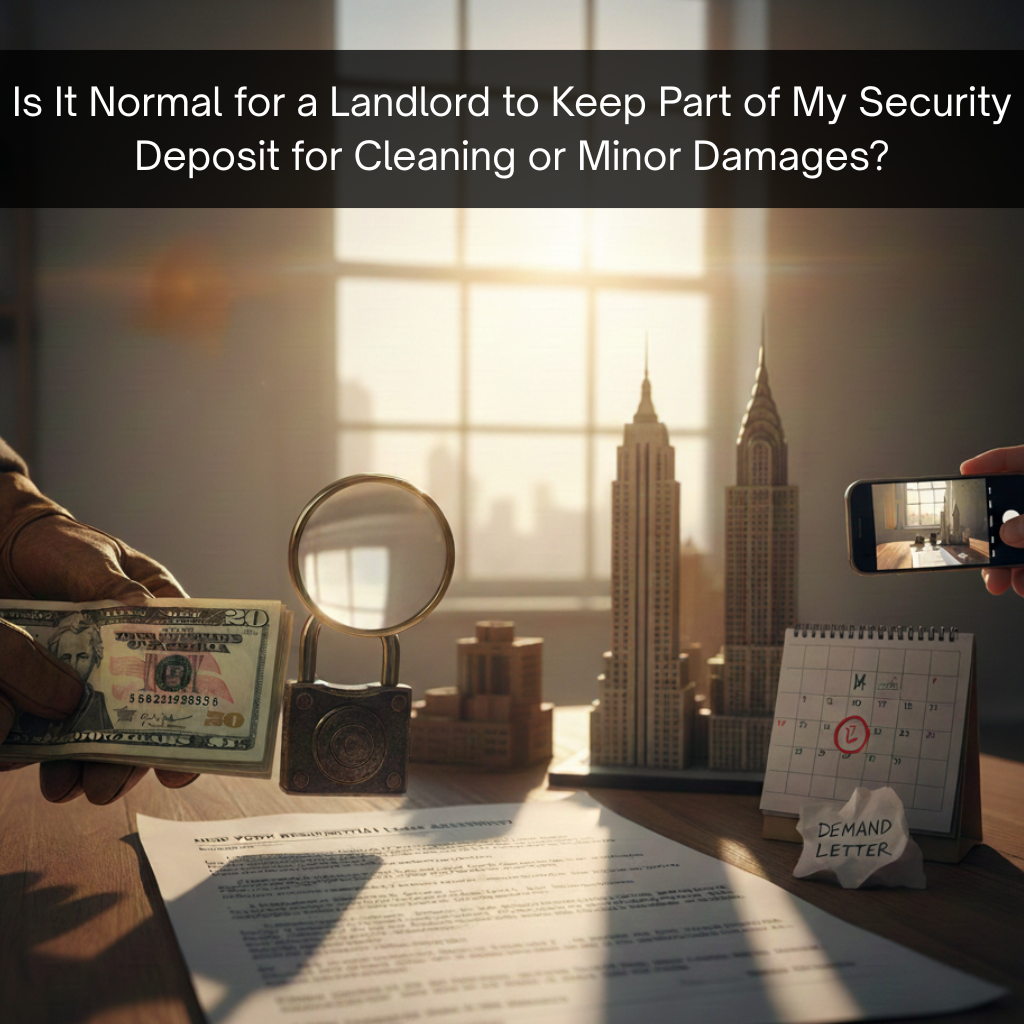
Here's what catches most New York tenants off guard: your landlord can keep part of your security deposit for cleaning and minor damages—but only under specific conditions that most landlords conveniently ignore.
Understanding these rules transforms you from someone accepting whatever deduction your landlord claims to someone who knows exactly when to push back and collect what's rightfully yours.
New York law allows landlords to withhold portions of your security deposit for damage you caused that goes beyond normal wear and tear. The key word here is "caused"—not damage that simply happened over time.
Legitimate deductions include:
Notice what's missing from that list: the natural aging of your apartment.
This is where landlords frequently overreach. Normal wear and tear means the natural deterioration that happens when someone lives in a space, and landlords cannot charge you for it. Period.
You cannot be charged for:
The distinction matters because it's the difference between losing $800 of your deposit and losing nothing at all.
Here's where New York law gives you real teeth: your landlord has exactly 14 days from when you move out to send you an itemized statement of any deductions. Not a vague list—a detailed breakdown with receipts or invoices showing actual costs.
What this statement must include:
Miss that 14-day deadline? Your landlord forfeits their right to withhold anything. That's not a guideline—that's the law, and it's enforceable.
Smart tenants request a pre-move-out inspection. This walkthrough with your landlord lets you identify potential deductions before you leave, giving you the chance to fix minor issues yourself for far less than your landlord would charge.
Send this request in writing at least two weeks before your move-out date. Your landlord isn't required to grant it, but most will—and when they document issues during this inspection, they can't suddenly "discover" new problems after you've left.
Unfair deductions aren't just frustrating—they're often illegal, and New York law compensates you for landlord violations.
Red flags that deductions are improper:
Document everything. Take photos when you move in and when you move out. These become your evidence when you need to prove the apartment's actual condition.
When your landlord keeps money they shouldn't, you have clear steps to recover it—and potentially collect far more than they took.
Your action plan:
Most landlords settle quickly when they receive a well-documented demand letter, because they know the law isn't on their side.
Is it normal for landlords to keep part of your deposit? Yes—but that doesn't mean it's legal in your case.
The difference between losing money and getting everything back comes down to knowing these rules and having documentation that proves your apartment's condition. When you can demonstrate that deductions don't meet legal standards, you're not asking for your money back—you're demanding what the law already says is yours.
Your security deposit isn't your landlord's bonus. It's your money being held temporarily, and New York law gives you multiple ways to ensure you get it back when you're entitled to it.